
Mike von der Nahmer & Kasia Krawczyk (DEU & POL)
Transdisciplinary Arts | Artistic Research | Sound and Performance | Participatory Practice
2026
The Soil Does Not Speak Back
- Exploring the Relationships Between Humans, Soil, and Microbial Life
Mike von der Nahmer and Dr. Katarzyna “Kasia” Krawczyk have been selected for the fifth instalment of Earthwise Residency’s Curious Encounters. They will spend 8 weeks in residency and work on their interdisciplinary project, which explores how relationships between humans, soil, and microbial life become perceptible through scientific practice, sound, movement, storytelling, and collective artistic research. All which can be experienced in a events and exchanges throughout the autumn. Find the events in our calendar. Would you like to get into contact with either Mike or Kasia feel free to contact us.
- The Soil Does Not Speak Back is a collaborative artistic research project by Mike von der Nahmer and Dr. Katarzyna “Kasia” Krawczyk exploring the often invisible relationships between humans, soil, and microbial life.
- The project begins with a paradox: soil does not speak back in any human sense, yet it is never silent. It stores traces, transforms materials, carries microbial communities, registers environmental change, and shapes what can emerge next. Rather than imagining microbes as human-like characters or claiming a simple dialogue with nature, the project asks how relation becomes perceptible through difference, response, exchange, delay, threshold, adaptation, and residue.
- The collaboration between Kasia and Mike is the core of the project. Kasia’s scientific practice, observations, images, and short accounts of daily microbial encounters form the project’s factual and temporal anchor. Mike develops visual, sonic, spatial, and performative translations from this material. Their work is not an artistic interpretation added after scientific research. It is a shared process in which scientific inquiry and artistic practice continually question, refine, and reshape one another.
- The residency does not begin from zero. Mike has already developed an extensive research environment entitled Before We Know — Where Human-Microbe Contact Becomes Relation. It includes bilingual workshop cards, Living Scores, posters, perceptual experiments, field-note formats, relational maps, and tools for distinguishing observation, interpretation, and uncertainty. These materials explore processes such as density, gradients, permeability, exchange, latency, feedback, adaptation, thresholds, and traces.
- At Earthwise, Kasia and Mike will test, revise, and extend this material in relation to the specific landscape, soils, communities, and histories of the area. They are particularly interested in how different generations have perceived and worked with soil and nature: what has changed, what has disappeared, what remains in memory, and what forms of knowledge have passed between people over time.
- The project will include conversations, field observation, scientific practice, sound and image work, Living Scores, and participatory workshops. Most workshops will last approximately 90 minutes and will be adapted to different ages, backgrounds, and levels of experience. Participants may work through drawing, associative writing, poetry, theatre, sound, movement, dance, and Science Choreography.
- The residency will gradually create a shared collection of stories, movements, drawings, sounds, observations, and relational traces. These materials will contribute to a living atlas of human-soil-microbe relations, a series of artistic research scores, and a final public sharing in which scientific, embodied, local, and poetic forms of knowledge can meet without being forced into a single explanation.
- Curious Encounters 5 & 6 are made possible with support from the Danish Arts Foundation.
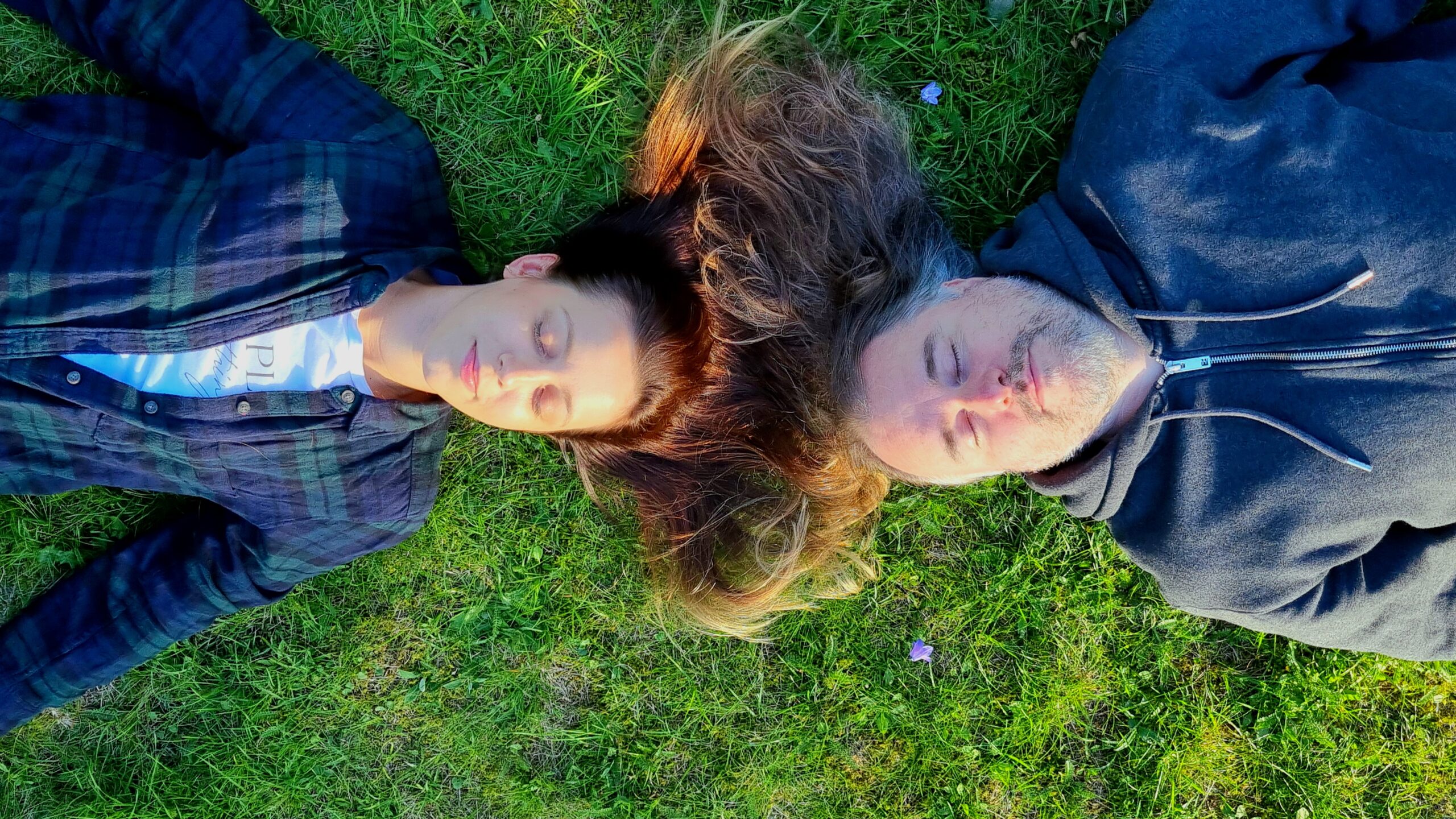
The residents
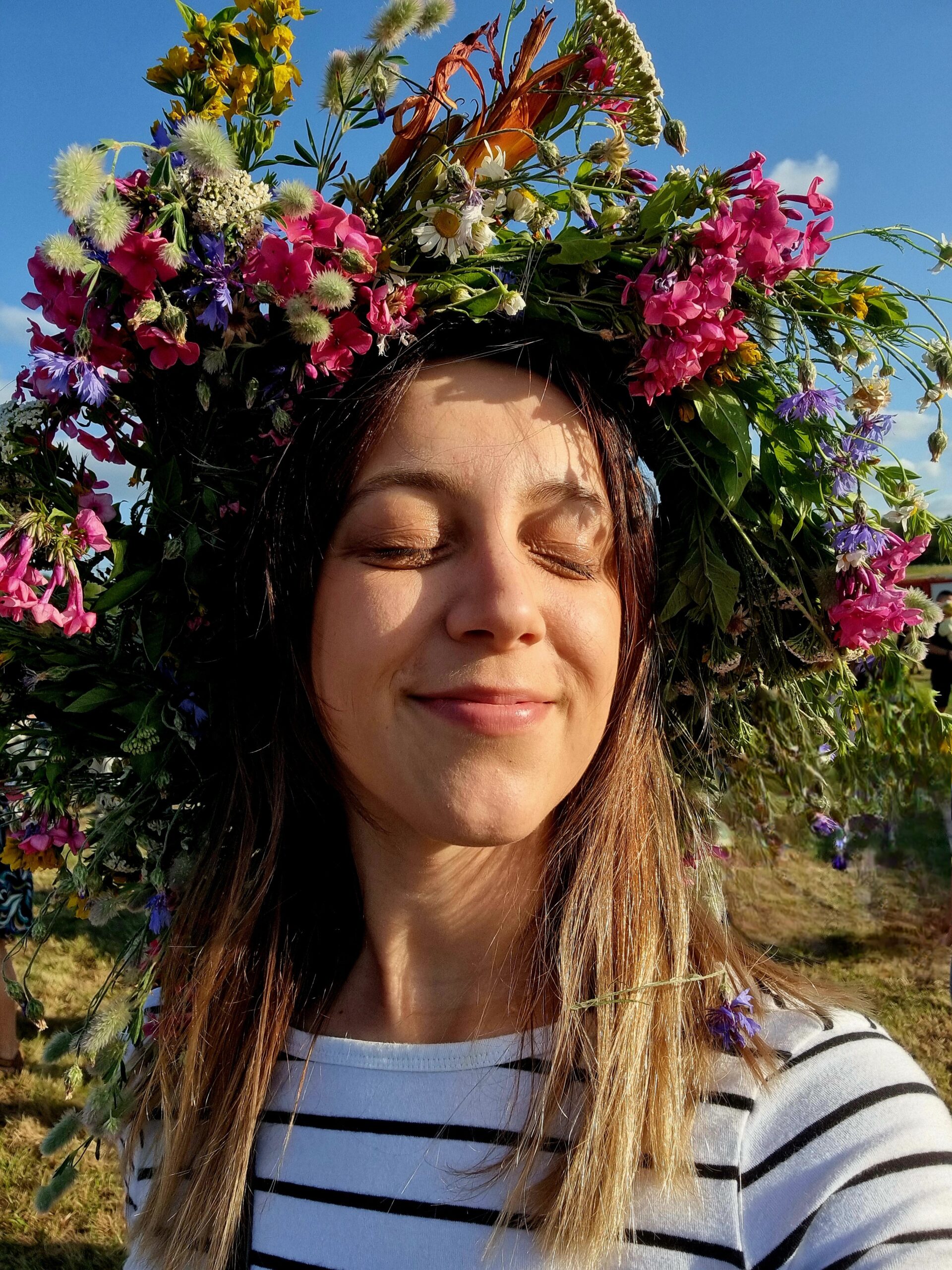
Dr. Katarzyna ”Kasia” Krawczyk (she/her)
- Kasia is a scientist, a molecular biotechnologist with a PhD in plant biochemistry. Her research explores how plants respond and adapt to changing and challenging environmental conditions, from the complex molecular processes taking place inside the cells to the broader physiological responses affecting the interactions between plants, microorganisms and their surroundings.
- Throughout the years, Kasia has worked in interdisciplinary and international research environments across Poland, Italy, Spain, Germany and the United States. Coming from Poland and working across different cultural and scientific environments, Kasia is also interested in how culture shapes the ways we see and interpret the world. Her curiosity about the connections between life, environment and adaptation leads her to explore how plants and microbial communities can help us understand resilience in changing ecosystems on Earth and potentially beyond it.
- Her work and interests move between plant science, space agriculture and astrobiology, bringing together different scales and perspectives to explore one simple question: how does life adapt?
- Alongside her scientific work, Kasia has always been drawn to artistic forms of expression, with theatre and music being particularly meaningful to her. Art offers her a different way of experiencing and reflecting on the world, that is less about finding answers and more about asking questions, evoking emotions and opening space for new perspectives. Her curiosity about the encounter between science and art comes from this openness to different ways of seeing and understanding the world.
4
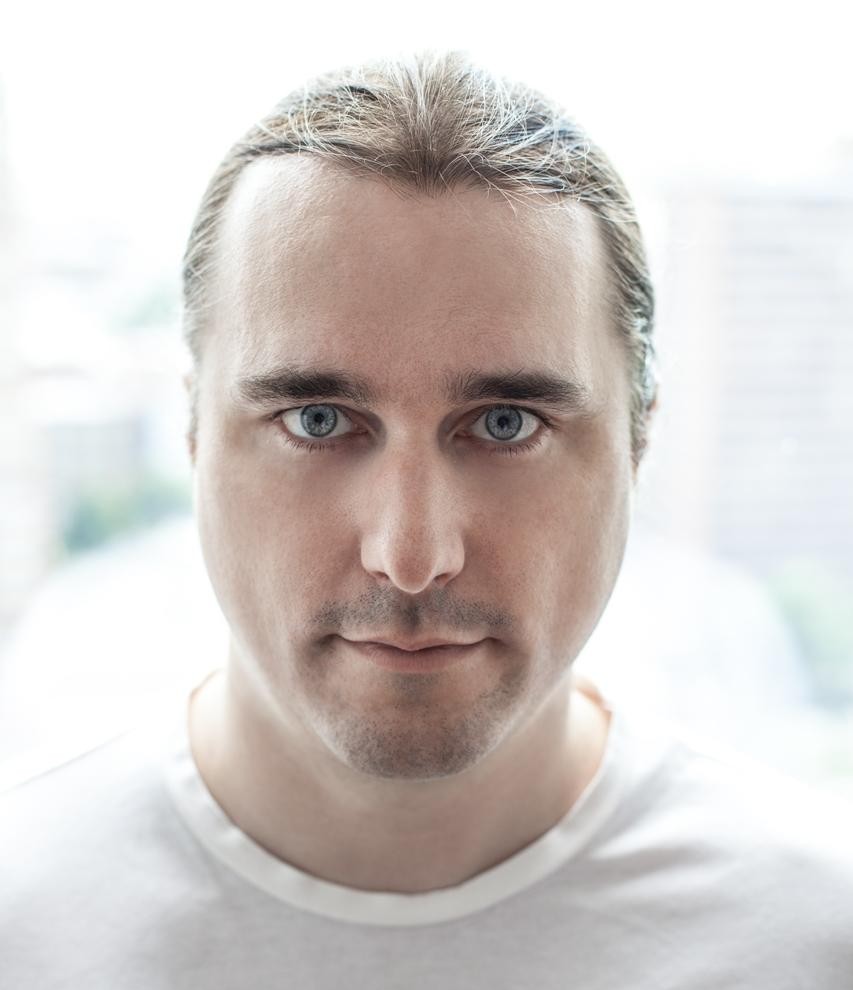
Mike von der Nahmer
- Mike is a composer, transdisciplinary artist-researcher, music therapist, and practitioner of intermodal arts-based therapeutic work. Across more than 200 works and projects, his practice moves through five interconnected worlds: the human, the machine, the environmental, the cosmic, and the collective.
- Working with composition, sonification, movement, image, text, and participatory performance, he creates methods for encountering processes that usually remain hidden: mental states, artificial intelligence, microbial relations, institutional structures, technological systems, and collective behavior. Rather than adapting people to machines or abstract systems, his work asks how those systems might be reshaped around human perception, embodied knowledge, and biological, cognitive, and temporal limits.
- From 2020 to 2024, von der Nahmer worked as a Research Scientist and Doctoral Researcher at the German Aerospace Center (DLR). There, he developed project-specific sonifications, auditory notices, and musical compositions for air-traffic control, digital assistance systems, human-automation teaming, and other safety-critical environments. His earlier work with the BMW Group included the development of functional auditory notices for BMW i electric vehicles, alongside additional sound-design projects for MINI and Rolls-Royce.
- From 2024 to 2025, he served as Assistant Professor in the Master’s Program in Experimental Media & Performing Arts at Seoul Institute of the Arts, where he developed interdisciplinary laboratories connecting dance, music, film, writing, design, science, and therapeutic practice.
- A central outcome of this work is Science Choreography, an embodied research methodology that uses the body not merely to illustrate scientific knowledge, but to investigate it. Participants enter scientific, ecological, or systemic questions through movement, sound, spatial composition, writing, drawing, and collective experimentation. By physically testing relations, rules, forces, thresholds, and uncertainties, they can expose assumptions, generate new questions, and encounter knowledge from inside a system rather than only observing it from outside.
- Most recently, as Artist in Residence at the Hanse-Wissenschaftskolleg Institute for Advanced Study, von der Nahmer developed SonaME — Sonification of Mental Experience. Its associated project Listening to Care brought sound, movement, drawing, writing, interviews, and Living Scores into psychiatric care and nursing education. The work investigates how illness, trust, exhaustion, institutional space, and care can become perceptible without reducing human experience to diagnosis or explanation.
- His environmental and more-than-human research explores relations among bodies, landscapes, microbial life, architecture, and ecological systems. These environments are not treated as passive settings, but as active forces that organize attention, movement, contact, and behavior.
- His work also reaches into the cosmic world. It includes an artist residency at the SETI Institute and participation in the Xu Bing Space Art Residency Program. His project Messages from the Floating Gallery is conceived as a collective visual poem made from artworks and short poetic messages contributed by students and transmitted to an art satellite in low Earth orbit.
- Across these worlds, von der Nahmer develops Living Scores: rule-based systems that translate data, relations, atmospheres, and collective behavior into movement, sound, language, image, and spatial action. They do not prescribe a finished artwork. They create conditions in which a system can be entered, disturbed, listened to, and understood differently.
- How can art create forms of listening between humans, machines, environments, collective systems, and forms of life or intelligence that do not speak in familiar ways?
4